BackEdge AI

Edge AI

a16z
2026-08-29 18:05:34

a16z launches $1.1 billion Machine Age Fund to back AI hardware, data centers and power systems

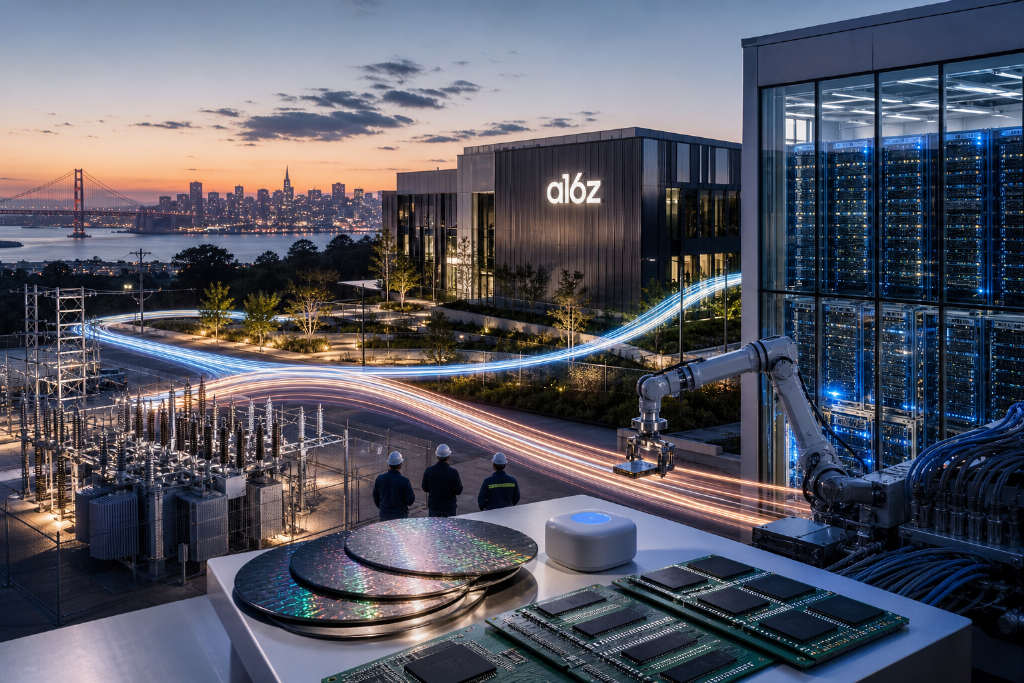
Andreessen Horowitz, better known as a16z, said it has raised $1.1 billion for a new Machine Age Fund focused on AI hardware and physical infrastructure. The firm is shifting attention away from the software-heavy AI trade that dominated recent years and toward the lower layers of the stack, including chips, memory, networking, storage, data centers, robotics, home AI devices and the power systems required to run them. a16z argued that the constraint on the next phase of AI is no longer just access to more GPUs. As AI moves from chatbots into reasoning, coding and other knowledge work, token consumption and compute demand per task are rising sharply. The firm said that change is pushing up demand for compute, memory and network capacity while exposing limits in electricity supply and hardware manufacturing. Using NVIDIA’s roadmap as an example, a16z said rack-level compute density has increased about 28x from the H100 generation to Rubin systems. It also pointed to rising rack power draw, from roughly 5 to 10 kW in traditional data centers to 100 to 250 kW for AI systems today, with a projection of 1 MW per rack within three years. The firm added that some AI facilities are moving from tens of megawatts to hundreds of megawatts, and in some cases toward gigawatt-scale campuses.
70
a16z launches $1.1 billion Machine Age Fund to back AI hardware, data centers and power systems
MAGNE.AI
2026-08-26 08:00:22

MAGNE.AI pushes beyond a Web3 phone into edge AI and agent infrastructure

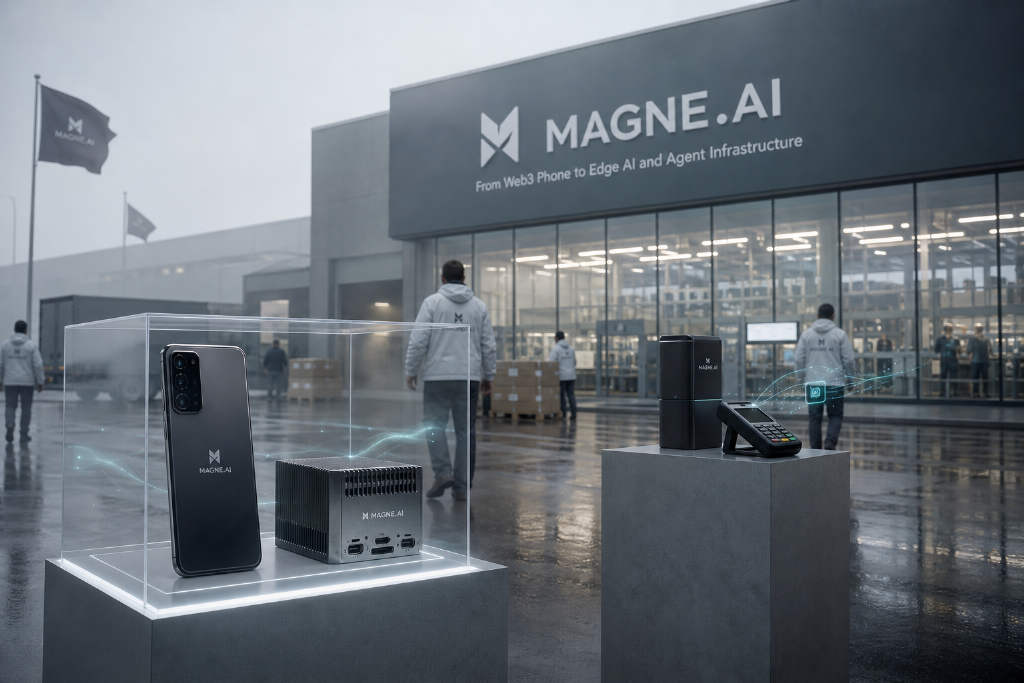
MAGNE.AI is no longer being framed only as a Web3 smartphone project. Public materials reviewed from RootData, regulatory filings and the company’s own disclosures show a broader buildout across devices, edge AI, identity rails and machine payments. On the hardware side, MAGNE Phone Gen1 is listed at the PVT P2 stage after Pre-EVT and EVT P1, with first-batch manufacturing targeted for the third quarter of 2026. The company has also published FCC-linked materials, a 3D phone structure viewer and staged production updates. On the enterprise side, MAGNE AI BOX is being positioned for private AI and edge-compute deployments, with a Release Gate framework, one local run validation for a Qwen3.6-35B-A3B Q4_K_M artifact, and a Gate 1 plan to build three prototypes for performance, thermal, offline and recovery testing. Agent Pay, meanwhile, has shown a local contract demo and testnet evidence, but end-to-end HTTP 402 flows are still under development and production payments are not open. MAGNE.AI disclosed a $2.64 million strategic follow-on round on Aug. 5, 2026, bringing cumulative public financing to $12.64 million by its own account. Even so, the article argues the key questions now are delivery, prototype validation, public testnet payment proof and whether community participation can convert into actual device users.

140
MAGNE.AI pushes beyond a Web3 phone into edge AI and agent infrastructure
Nvidia
2026-08-26 09:14:48

Nvidia unveils Jetson Orin Nano 2 for edge AI in drones and robots

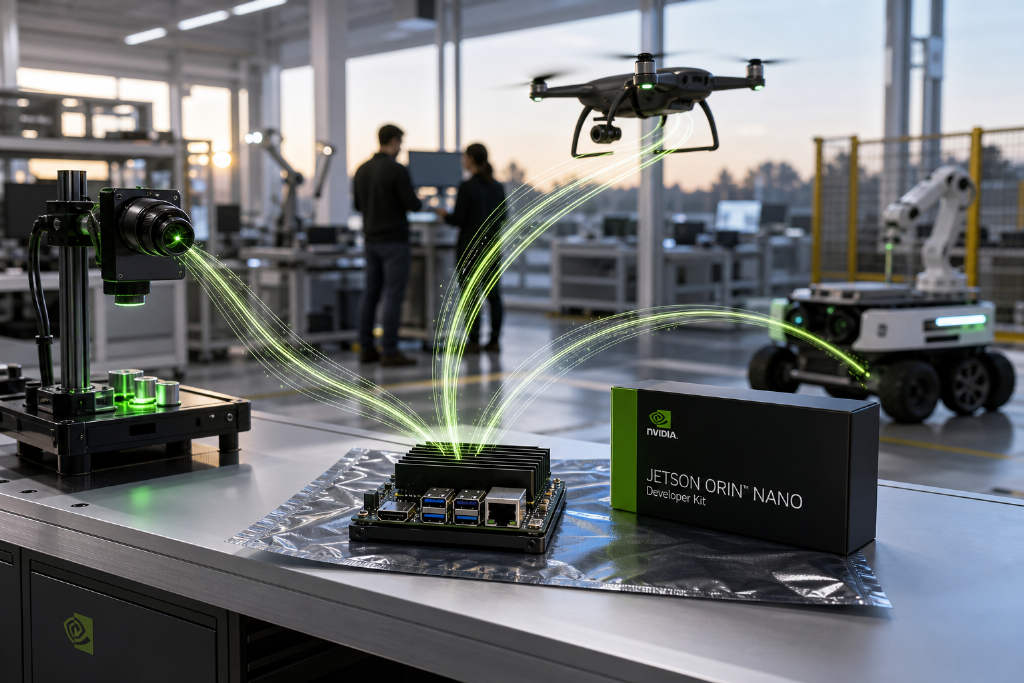
Nvidia has introduced the Jetson Orin Nano 2, an entry-level edge robotics computer aimed at bringing physical AI to drones, robots, and vision systems. The company says the device lets developers run generative AI models directly on-device instead of relying on data centers, a setup designed for real-time inference at the edge. According to Nvidia, Jetson Orin Nano 2 delivers 78 trillion AI operations per second, along with 8GB of memory and an eight-core Arm CPU. Nvidia also said the new system offers double the inference performance of the current Jetson Orin Nano Super while cutting power consumption by 40% in 15-watt mode. The hardware supports large language models and vision-language models, including Nvidia’s Cosmos and Nemotron, as well as Gemma 4 and Qwen 3. Nvidia robotics and edge AI vice president Deepu Talla said the product is intended to bring what he described as breakthrough performance to millions of developers. Companies including Cognex, Doosan Bobcat, and Matic have already started adopting or exploring the platform. Wing, Alphabet’s drone delivery unit, plans to evaluate the system to improve real-time AI perception and inference for faster and safer deliveries, while Matic Robots plans to use it to add conversational AI, gesture detection, and semantic understanding to its home cleaning robots.

100
Nvidia unveils Jetson Orin Nano 2 for edge AI in drones and robots
Ingenic
2026-08-25 02:09:10

Ingenic Joins the A+H Ranks After Hong Kong Listing, Backed by Memory, Compute and Analog Chip Lines

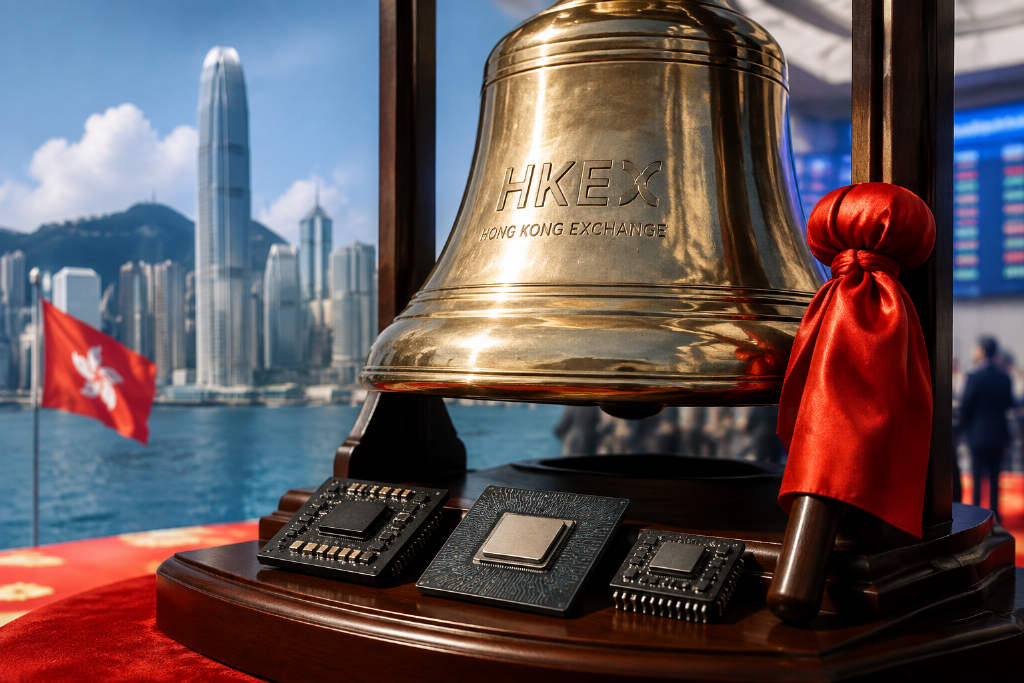
Ingenic rang the opening bell in Hong Kong on Aug. 25, debuting at HK$100 per H share and reaching an opening market capitalization of about HK$51.5 billion. The company had already been listed on Shenzhen’s ChiNext board since May 31, 2011, and the new listing places it among semiconductor companies with both A-share and H-share listings. The prospectus outlines a chip platform strategy built across three product lines: memory, compute and analog. That structure took shape after Ingenic completed its acquisition of Beijing Silicon and indirectly took control of Integrated Silicon Solution Inc. (ISSI) in 2020. Since then, the company has operated around three brands: ISSI for memory, Ingenic for compute and Lumissil for analog. Its recent numbers show a rebound. Revenue moved from RMB 45.31 billion in 2023 to RMB 42.13 billion in 2024, then back up to RMB 47.41 billion in 2025. First-quarter 2026 revenue reached RMB 15.60 billion, up 47.1% from a year earlier, while net profit rose to RMB 3.20 billion and gross margin climbed to 42.6%. Ingenic said it expects to raise HK$3.13 billion from the Hong Kong offering. Half of the proceeds are earmarked for R&D, while 25% is set aside for strategic investments and acquisitions.

250
Ingenic Joins the A+H Ranks After Hong Kong Listing, Backed by Memory, Compute and Analog Chip Lines
Coinbase
2026-08-19 10:09:49

Coinbase adds Cluster Protocol to roadmap as CP pitch ties AI agents to Base

Coinbase Markets said on Aug. 17, 2026 that it had added Cluster Protocol, whose token trades under CP, to its asset listing roadmap and published the project’s Base contract address. The move put fresh attention on a project that says it is building an orchestration layer for autonomous AI workflows on Base, combining model inference, tokenized data, GPU compute and x402-based micro-payments under one settlement stack. According to the source article, Cluster routes requests to more than 500 open-source models through an OpenAI-compatible API, stores datasets on IPFS, represents ownership with ERC-721 NFTs on Base, and uses smart contracts to split revenue, with creators receiving 85%. Its browser-native product, CodeXero, is designed to let users describe an idea in natural language and deploy a dApp while consuming Cluster’s underlying services. The same article also notes a gap between the project’s narrative and disclosed activity. Cluster said it recorded 130,000 inference payment requests and $79,000 in settlements over the past 30 days, while CodeXero has connected more than 300,000 wallets and deployed more than 25,000 onchain dApps. Those figures were self-reported by the project, with no independent dashboard verification cited. Cluster has raised $7.75 million in total, including a $5 million round led by DAO5 on April 23, 2026.

2010
Coinbase adds Cluster Protocol to roadmap as CP pitch ties AI agents to Base
OpenAI
2026-08-11 13:02:58

OpenAI locks down GPT-6 Astra as Jensen Huang defends $500 billion AI financing push

TechFlow’s Aug. 11 roundup put two developments at the center of the day’s tech narrative. OpenAI reportedly locked down its next-generation model, GPT-6 Astra, after internal alarms were triggered by the system’s cyberattack capabilities, marking what the report described as the first such warning tied to network security performance. At the same time, Nvidia CEO Jensen Huang responded to criticism around a proposed $500 billion AI infrastructure financing effort, saying AI factories have become investment-grade assets and that the demand behind the buildout is real. The broader update also covered a string of moves across AI, crypto, hardware and macro markets. Anthropic said it raised the known lower bound related to the Riemann hypothesis from 41.6% to 67.2%, while Claude now embeds invisible watermarks in all generated text. In crypto, Upbit listed DApp operating system token DOS across KRW, BTC and USDT markets. TSMC posted July revenue of NT$467.58 billion, and Intel was reported to be planning a $15 billion common stock issuance. The report also tracked Meta’s return to open source, Google DeepMind’s launch of Lyria 3.5, rising oil and gold prices tied to the Strait of Hormuz, and market focus on upcoming U.S. CPI data.

1060
OpenAI locks down GPT-6 Astra as Jensen Huang defends $500 billion AI financing push
ByteDance
2026-07-23 13:05:21

ByteDance launches Seed STEM scientist program with an initial six-month term

ByteDance has officially launched its Seed STEM Scientist Program, according to a report cited by ChainCatcher from IT Home. The company said the initiative will bring in 100 outstanding scholars from frontier scientific fields to work on real-world research problems, with the stated goal of using AI to speed up scientific discovery. The program was initiated by the Seed Edge research team and will provide ample computing resources as well as competitive compensation. Participants will join under one of two tracks: scientist advisors or PhD interns. ByteDance said the first phase is expected to last about six months. The workplace is located in Haidian district, Beijing, and the application deadline is Sept. 30, 2026. No additional details on specific research topics were disclosed in the source text.

980
ByteDance launches Seed STEM scientist program with an initial six-month term